MOVIE REVIEWS
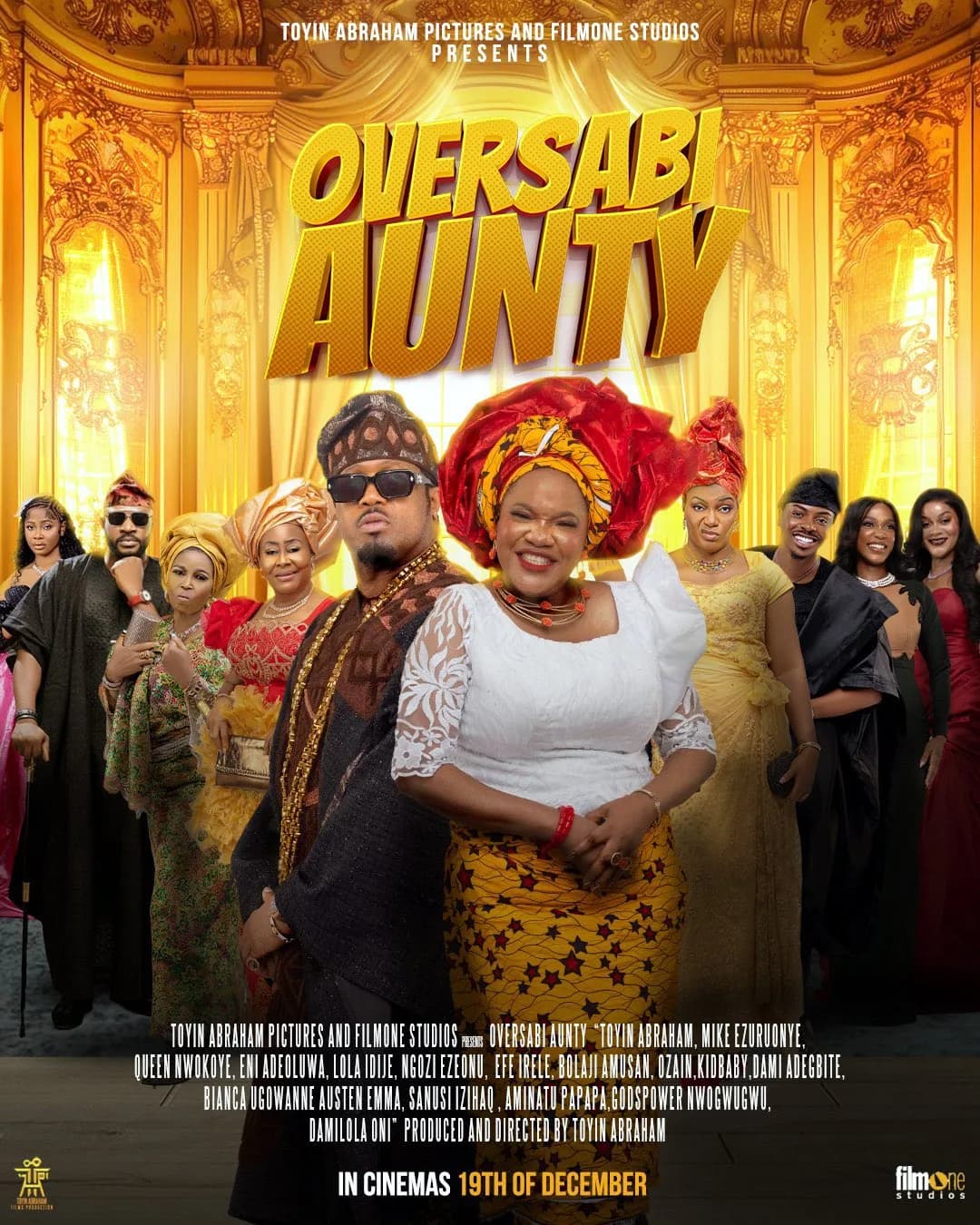
Movie Review: Oversabi Aunty
A
Anastasia Damian
19 min read
Oversabi Aunty has a meaningful message about parenting, but its execution leaves a lot to be desired. There's a good story somewhere in there, but the writing, the excessive shouting, and some of the decisions made towards the end kept it from reaching its full potential.
Toyin Abraham released Oversabi Aunty last year, but the movie recently arrived on Netflix this month, giving fans the opportunity to finally sit down and watch it at their own pace.
And let me just say, a lot of fans are not happy.
As much as this production was a step up for Toyin Abraham, it also brought up a lot of issues that viewers were not comfortable with. Some people are demanding their data back, while others are cursing because they feel they wasted their time watching the movie.
So, I've seen it, and this is my honest take on the movie, the cast, and what I think the film was trying to achieve.
The Cast
The cast was quite nice. We had Mike Ezuruonye, Queen Nwokoye, Ngozi Ezeonu on the Igbo side, alongside Toyin Abraham and her family on the Yoruba side. Overall, I didn't have many issues with the casting.
However, I do need to highlight the chemistry between Mike Ezuruonye's character and Toyin Abraham's character. It was quite nice. They gave off the energy of a married couple, specifically an intertribal couple who have to navigate the challenges that come with being from different ethnic backgrounds. I really enjoyed the natural chemistry between the two of them.
The shouting, though, was a bit too much. There was shouting everywhere! But even with that, the chemistry between those two was rock-solid compared to the chemistry among the other characters.
The Title: Oversabi Aunty
Let's talk about the title of the movie.
One of my major issues with Toyin Abraham's movies is that the titles can sometimes feel very tacky. Oversabi Aunty as a movie title, feels tacky to me. It can even discourage someone from wanting to watch the movie in the first place. A more palatable title would have made more sense.
But that's not all. Throughout the movie, we hear people referring to her as a “Oversabi Aunty.”
It's almost as if the movie keeps repeating its own title through the way the characters address her.
And naturally, people don't go out of their way to consistently call someone an “Oversabi Aunty.” It's awkward, it feels forced, and it was quite unnecessary. The repetition was simply too much. Way too much!
But I'm getting ahead of myself. Let's move on.
The Storyline
The storyline revolves around an overbearing, goody-two-shoes mother who believes she has a say not only in how her own children should be raised but also in how other people's children should be raised.
She has strong biases and preconceived ideas about how children should be brought up. She carries these biases into the church where she serves, essentially deciding who should be allowed into the church and who shouldn't.
As you can expect, her children go out of their way to show her that the very things she's trying to impose on other people can one day come back to haunt her. That's essentially the premise of the entire movie.
And I understand this premise because parents like that exist. There are mothers who believe God has given them a mandate to raise children in a particular way, so those children must look and behave according to a certain standard. They become so convinced that they know what good parenting looks like that they extend their opinions beyond their own homes, offering unsolicited advice and trying to dictate how other people should raise their children.
So, I get what the movie was trying to do. The premise wasn't much of a stretch because these kinds of people genuinely exist.
The Plots and Punishments
Now, to show us that her children are also dealing with the consequences of their mother's behaviour, the movie gives us different storylines for each of them. And honestly, some of these choices were interesting, while others left me asking questions.
Chuka: Mental Health Is Not About Being a “Manly Man”
Let's start with Chuka, the only son. He is so traumatised by his mother's constant shouting and slapping that he eventually withdraws entirely from the family.
Now, there have been arguments online that Chuka was portrayed by Eniola and that Eniola isn't a “manly man.” I reject that kind of mentality because mental health struggles do not happen only to hashtag manly men.
I dislike the fact that we even have a label like “manly men” and the assumption that the person playing Chuka should have been muscular, physically imposing, and covered in six-packs, rather than Eniola, who “wears lip gloss.”
That whole mindset doesn't make sense to me. Mental health struggles can affect anybody, from the guy who lifts the heaviest weights at the gym and has six-packs to the skinny guy in the family. It can happen to anybody, and anybody can portray that kind of experience.
But if I had to start with Chuka himself, I would say that he is on a path to no return. That is my honest opinion. Chuka is on a path to no return!
He has already killed someone accidentally, and I honestly fear that one day, he might kill someone intentionally. That is, if his mother's eventual sacrifice doesn't change anything. I'll get to what she did later, but for now, I want to focus on Chuka and the arguments surrounding his portrayal.
Some people felt that Eniola was the wrong person for the role, but I didn't see it that way. Chuka felt detached. He wasn't particularly interested in being around the family, and I thought that made sense.
People also seem to forget that when you're a boy in a family with three girls, you might naturally want to keep to yourself. You don't necessarily expect the boy to be hanging around his sisters all the time. Sometimes, the boys just want their own space.
So, I don't understand why people made his detachment seem so out of place. It wasn't out of place to me. It made perfect sense, and I had no problem with it.
Small But Mighty: Of All the Things She Could Do?
Then we move to the last child, Small But Mighty.
Now, this storyline was genuinely ridiculous to me.
Your family is financially successful. Mike Ezuruonye's character, Chidi, is portrayed as a very successful man. Yet, because you want to get back at your mother for the way she has caged you, you decide to become an agbero, a tout, a hoodlum at the beach who regulates who comes in and who goes out, surrounded by people who barely seem educated.
I have never in my life seen such ridiculousness before!
Of all the things she could have chosen to do, she had to become an agbero? And then she ends up getting pregnant through a setup. Why? Just why?
They could have given her a completely different storyline. I knew one of the children was going to get pregnant. What I didn't know was how that pregnancy was going to happen.
So, when Small But Mighty got pregnant, I was like, “Okay, fine. We have our pregnant child.”
Then I thought, there has to be another child who is going to be wayward in some other way. And, of course, the movie showed us the child who went to the club.
The Eldest Daughter: Enough Was Enough!
About the daughter who went to the club: she was actually dressed for a club, but because her mother had been constantly berating other people's children, the situation escalated.
I loved how the eldest daughter stepped up for her sibling. Because, honestly, I would have told my mother off too!
Yes, I knew the slap was coming. I could practically see it coming. But I loved the fact that she stood up for her sibling because, at that point, enough was enough.
Their mother was unbearable to those children. Absolutely unbearable. And enough was definitely enough because, oh my God, what an insufferable attitude!
I honestly have no idea how Chidi, Mike Ezuruonye's character, managed to stay married to this woman for so long, let alone have four children with her.
I have no idea how he was able to look past everything she embodies, but my God, she was just insufferable!
Ada: The Tragedy and the Victim-Blaming Question
Let's move on to Ada, the main victim in this entire story.
I am against victim-blaming because I don't think it's ever fair. However, I want us to look at the events leading up to what happened to Ada.
You know that the person you're dating has a temper. You went out together, and he slapped a waitress without thinking twice about it. He didn't even seem to understand what was wrong with what he had done. You know this person has anger issues, and his temper genuinely scares you. Eventually, you tell him you're done.
Then he convinces you to come and see him. That, to me, was the first mistake.
You go to his house for the first time, knowing that his parents aren't home. You want to tell him in person that the relationship is over. Okay, fine. You love him, and perhaps you feel that you owe him that conversation. But you're dealing with someone whose temper you already know can become frightening.
When he starts begging you to reconsider, I keep thinking about how differently that situation could have played out. Rather than allow the conversation to escalate, perhaps she could have agreed to postpone the discussion, waited for him to calm down, and found a safer way to leave.
If I were in her shoes, the moment I noticed Chuka becoming increasingly irate and irrational, I would have wanted to de-escalate the situation. I might have said, “Okay, I'm sorry. I know this is difficult for you. Let's calm down and talk later.”
Of course, that doesn't mean Ada was responsible for what happened to her. Chuka was responsible for his own actions. Someone else's anger does not justify violence, and nobody should have to manage another person's temper to stay alive.
But watching the movie, I couldn't stop thinking about how tragic the whole situation was.
Ada became collateral damage in a situation that wasn't hers to bear. She lost her life, while Chuka, the person whose actions led to her death, might still have the opportunity to move on with his life someday.
How painful is that?
How do you even begin to measure that kind of tragedy?
It was a very painful storyline. Very, very painful.
The Introduction:
Let's move on to the wedding—sorry, the introduction!
Chidi and Toyin are in an intertribal marriage, and this is where I started having some issues with the way the movie handled the cultural differences between their families.
Let's talk about the language issue first.
In many Nigerian families, the father's ethnic identity and traditions play an important role in how the children are identified, although family practices differ. In this particular case, Chidi is Igbo, while Toyin is Yoruba. So, from my perspective, I didn't understand why the groom's family arrived to conduct an introduction involving an Igbo family and proceeded to speak Yoruba as though the language of the bride's mother should automatically take precedence.
Who exactly were they speaking Yoruba for, when they knew very well that the girl's father was Igbo?
The girl's mother is Yoruba, yes, but her father is Igbo. Surely, the family should have considered a language that would allow everyone involved, especially the girl's father, to understand what was being said.
Honestly, I understood Queen Nwokoye's character, Rose, reacting the way she did. From where I was sitting, the situation didn't make much sense.
The Issue of Two Names
Then we come to the issue of the children having two names.
I feel the movie tried to turn this into a bigger problem than it needed to be. At some point, it seemed as though the film was suggesting that having parents from different ethnic backgrounds automatically creates a problem for their children.
I didn't buy that argument.
In many intertribal families, children have names from both sides of the family. They might have a name associated with their father's culture, another associated with their mother's culture, and perhaps additional names as well. The exact arrangement depends on the family, but having multiple names is hardly an unusual situation.
I have friends from intertribal marriages, and that is how naming works in their families. So, I didn't understand why it was being treated as such a serious issue in this movie.
There was even a point where one daughter complained that the situation was going to give her mental health issues. And I was thinking, “Is this really such a big deal?”
I have two names myself. When my late father was alive, he called me one name, while my mother called me another. I answered to both without any problem.
So, I found this particular conflict unnecessary. It felt like the movie was manufacturing tension where there didn't need to be any.
Intertribal marriages have their own dynamics, of course, but families also develop ways of navigating those differences. When a couple has been married for as long as Chidi and Toyin appear to have been, I would expect them to have worked out some of these practical questions about their children's names and cultural identities.
That was why this particular angle didn't work for me.
To be fair, I enjoyed the drama between the in-laws, especially the table scene and the tension surrounding the introduction. Those moments were entertaining, and I appreciated the performances. My issue is specifically with the way the movie handled the question of names.
Chioma, Aderonke, Bianca—whatever the names are, one person can have several names and answer to all of them. You can answer your grandmother in Igbo and your other grandmother in Yoruba. If anything, you have an opportunity to learn two languages and connect with both sides of your family.
I don't think having multiple names should automatically become a source of conflict.
I understand that the writers needed conflict to drive the story forward. But considering how many genuine challenges intertribal couples can face, I would have preferred to see this marriage portrayed more positively in this regard.
Intertribal marriage didn't have to be the problem. The film could have shown two families learning to understand each other, embracing their differences, and building a shared identity without making the children's names or cultural backgrounds seem like a crisis.
For me, that would have been a much more meaningful way to explore the subject.
A Mother's Sacrifice Should Have Limits
Let's now come to the final realisation, when we see her being removed from the ushering group and all of that. But I want to focus on the actual ending, when they discover Ada's body, call the police, and Toyin Abraham's character confesses to a murder she didn't commit.
That, to me, was a terrible decision.
See, a mother's sacrifice should have limits. There has to be a point where you draw the line, and this was one of those moments.
Let's compare it with Purple Hibiscus, where Jaja takes the blame for his mother. As much as I didn't want Jaja to do that, I understood why he made that decision. I understood the emotional circumstances surrounding his choice.
But in this case, Toyin Abraham's character seems determined to become the Jaja of this story by going to prison on behalf of her son. And I just couldn't accept that ending.
Let's remember that Chuka is still struggling with his issues. Unless his mother's sacrifice somehow transforms him completely, what guarantee do we have that he won't intentionally set out to hurt or kill somebody the next time?
How is this family supposed to heal?
Do not forget that Chidi loves his wife, as unbearable as she can be. How is Chidi supposed to process the fact that his son has killed somebody?
How is he supposed to move forward, knowing that his wife has taken the blame for something their son did?
The entire ending just didn't work for me. I did not like it. Not one bit!
Chuka should have faced the consequences of his actions. He should have been arrested, and the family should have been forced to confront the full reality of what had happened.
Perhaps that would have been the moment when his mother finally began to understand the consequences of her behaviour. She had spent so much time controlling her children, shouting at them, slapping them, and imposing her ideas on them that she seemed blind to the damage happening right in front of her.
But even in all those conversations, Chuka himself never really got the opportunity to speak up and explain what he was going through.
His elder sister was able to stand up for herself and challenge their mother. But Chuka couldn't seem to express himself in the same way. He couldn't articulate what all the shouting, slapping, and emotional pressure had done to him.
There was no proper resolution to that conflict. We didn't get a meaningful conversation in which he confronted his mother and explained how her behaviour had affected him. We didn't get a proper reckoning with the damage that had been done.
All we got was essentially, “Yes, call the police. I'm ready to go to jail.”
Eh? No, now!
It did not make sense to me. I was so annoyed by that ending.
She should not have gone to jail for something she didn't do. Chuka should have faced the consequences, while his mother remained outside prison to reflect on her own behaviour and the part she played in the breakdown of her family.
And let's be clear: that doesn't mean his mother's behaviour excuses his actions. It means that both the harm she caused and the harm he inflicted needed to be confronted honestly.
There were several possible ways the writers could have resolved this storyline. Chuka could have faced the criminal justice system, with his mental health properly assessed as part of the process. Depending on the findings, his condition could have influenced the appropriate legal and clinical response.
At one point, I genuinely thought that was where the movie was heading. I expected them to arrest Chuka and explore whether his mental state might warrant psychiatric evaluation and treatment, rather than have his mother take the fall for a crime she didn't commit.
Because, honestly, how do you kill somebody and then remain in the same room with the body for days without leaving? That behaviour was deeply disturbing, and I expected the film to examine what it meant for Chuka's mental state.
Of course, that alone doesn't establish that someone is legally insane or has a particular mental health condition. But it certainly raises questions that the movie could have explored.
Instead, we got a mother sacrificing her freedom for a son whose problems had never been properly resolved. And that, for me, was the biggest disappointment of the entire ending.
Overall Verdict: Was It Worth Watching?
Overall, I watched it because I wanted to give it a chance. I wasn't particularly impressed by the title, but I decided to watch it with an open mind.
And, to be fair, it wasn't entirely bad. It had a worthwhile moral lesson, and I think many African mothers, particularly those with more traditional and rigid ideas about parenting, could benefit from watching it and reflecting on its message.
However, there were just too many issues.
The continuity, for instance, had its problems. There was the car that was towed and somehow found its way into the compound. Little things like that made me question the attention paid to the details of the production.
Then there was the shouting.
My God, the shouting!
Every other minute, somebody was shouting. Every time Toyin Abraham's character started yelling, I felt like I was developing a headache just from watching the movie. The shouting was excessive, and it became exhausting after a while.
But beyond all these complaints, I think we need to pay attention to the concern the movie was trying to raise.
And no, the central issue wasn't simply the cultural drama surrounding intertribal marriage. For me, the more important message was about how parents can tighten the leash so much that they become blind to what is happening to their own children.
They become so convinced that they know what is best for their children that they fail to notice when those children begin to fall apart emotionally and psychologically.
And when something eventually goes wrong, instead of reflecting on their own actions, they start looking for supernatural explanations.
Sometimes, there are no village people involved in the situation at all. Sometimes, the consequences are connected to what has been happening right inside the home.
That, I think, is the conversation this movie could have explored more deeply: the danger of excessive parental control, the emotional consequences of harsh parenting, and the importance of recognising when your children are struggling instead of simply labelling their behaviour as rebellion or spiritual attack.
Unfortunately, the film's own ending undermined some of that message for me. It raised important questions about parental responsibility but then allowed the mother to take the blame for her son's crime without giving either of them the meaningful confrontation or resolution their story needed.
So, with the exceptions of the issues I've highlighted, Oversabi Aunty was an okay watch. It wasn't a complete disaster, but it wasn't the kind of movie that left me entirely satisfied either.
Would I recommend it? Yes, with reservations.
It's a decent background watch if you're working on your desktop and want something playing in the background. The movie is about two hours long, and I honestly think that's the best way to approach it.
Because if you sit down and focus on every detail, as I did, you might find yourself getting frustrated with the shouting, the plot choices, the continuity issues, and the ending.
I had to concentrate while watching it, and there were moments when I was genuinely annoyed. But overall, it was an okay watch.
Tags
Share
A
Anastasia Damian
Contributor
Anastasia Damian is a contributor to Kiribé, covering culture, cinema, and the intersection of art and society across the African continent and beyond.
Read next
MOVIE REVIEWS
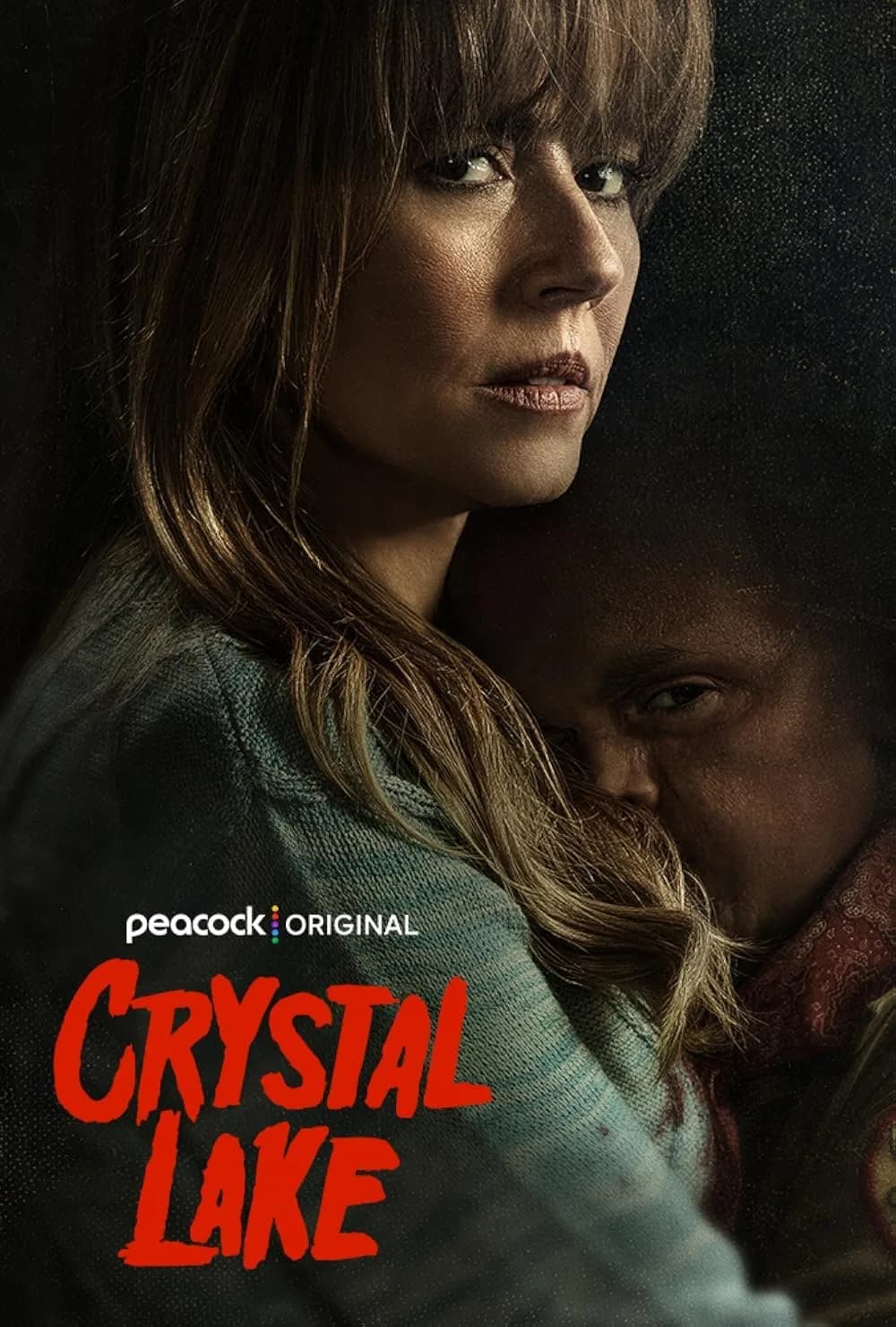
TV Show Review: Crystal Lake
Crystal Lake delivers a bloody, suspenseful, and emotionally engaging origin story for Pamela and Jason Voorhees, with strong performances from Linda Cardellini and Hamish Linklater, proving that a horror series can stand on its own even when its place in the Friday the 13th timeline leaves fans divided.
Anastasia Damian
·
MOVIE REVIEWS
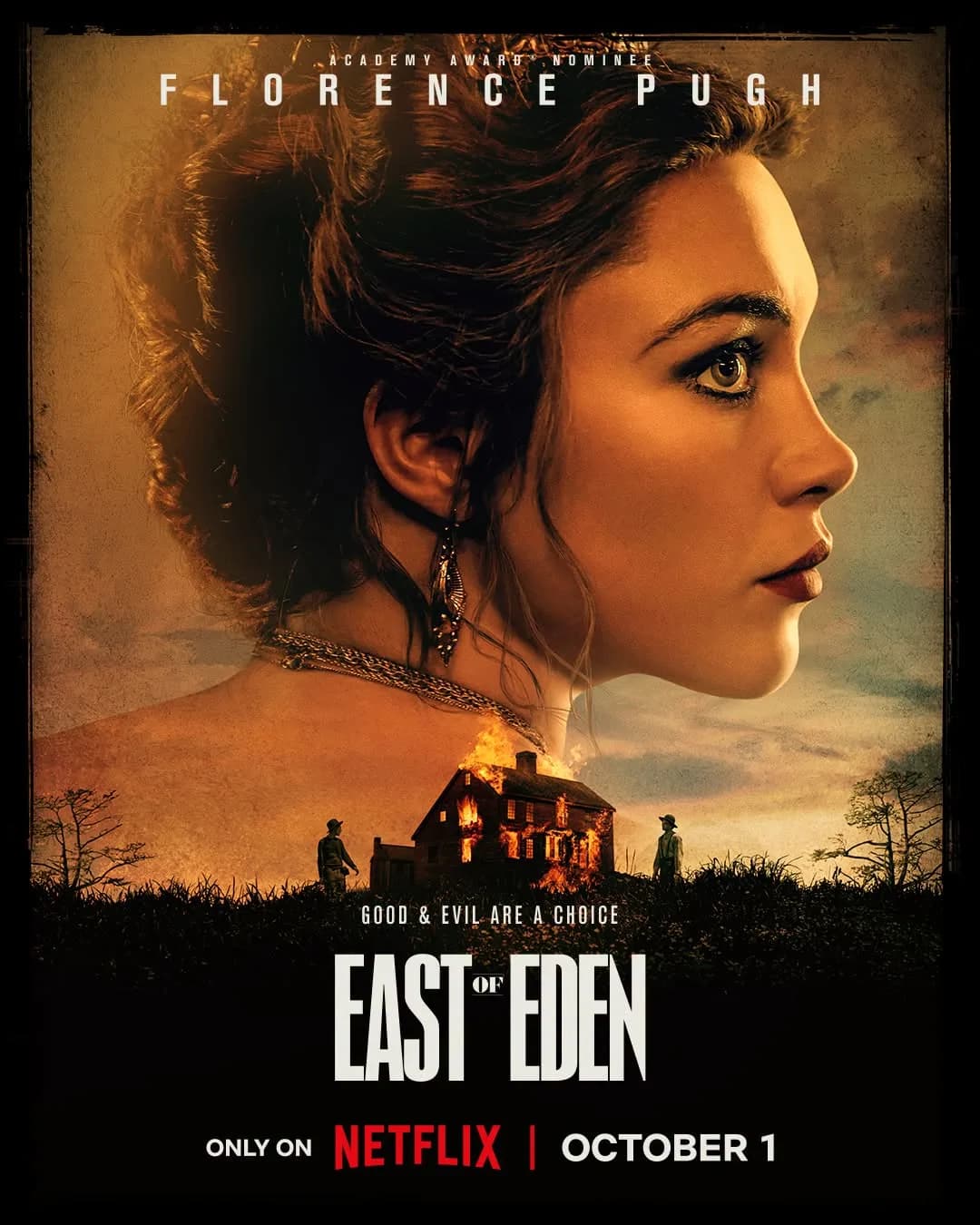
TV Show Review: East of Eden
East of Eden is a beautifully acted, emotionally gripping period drama about a dysfunctional family whose cycles of jealousy, betrayal, obsession, and loss reveal how the inability to confront our own darkness can destroy the people we love.
Anastasia Damian
·
MOVIE REVIEWS
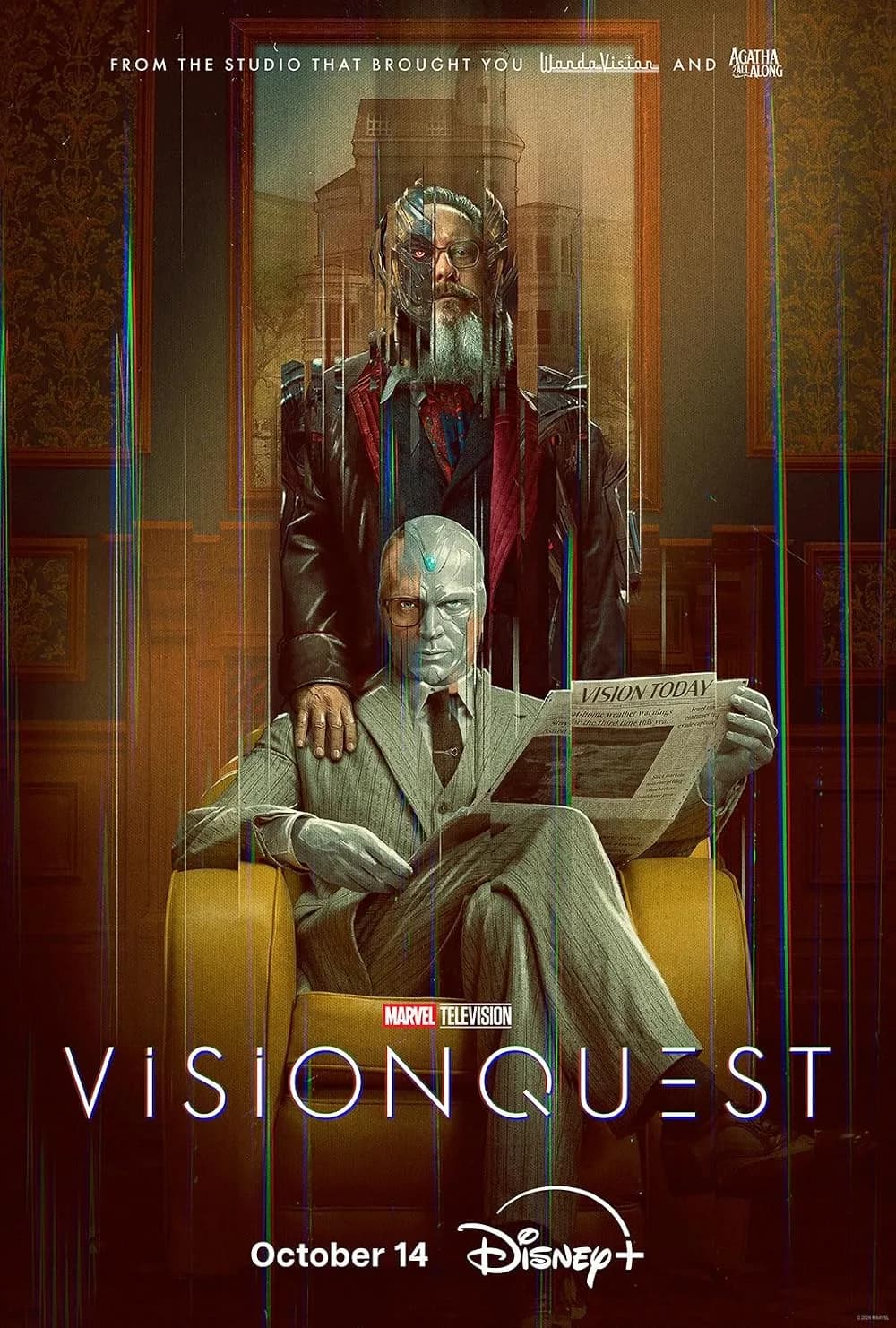
TV Show Review: Vision Quest EPs 1 & 2
VisionQuest is shaping up to be one of the MCU’s best shows, combining outstanding production, sharp dialogue, James Spader’s brilliant return as Ultron, heartbreaking sacrifices and a compelling exploration of Vision’s identity that proves a superhero story doesn’t always need explosions to be extraordinary.
Anastasia Damian
·
Join the Conversation
Stay Ahead of the Story
Subscribe to Kiribé for premium entertainment journalism, exclusive interviews, and cultural commentary delivered weekly.